Fan Clutch Making Noise When Shutting Off 2006 Dodge 2500
We get a good deal of calls on a day by day basis with customers trying to diagnose some type of issue with their truck. As luck would have it, we're typically able to help diagnose and have recommendations for products or procedures to remediate the issue. We mustiness take in developed quite a name for ourselves finished the years, As frequently we even off get calls from shops that are scratching their heads, hoping we have the golden ticket, and fortunately, we usually do! One of the about common calls we get are from customers with a 2003-2007 Cummins that have developed either a hard take off or no start condition. In rules of order to help out, we had our very possess Tyler Lucas, set back together this step away stone's throw tutorial that you will hopefully find perceptive. Tyler has been elbow deep in Rudolf Christian Karl Diesel engines for eld, especially Cummins, soh he is a wealth of selective information when hard to curative a plagued engine.
The very first thing that needs to be checked is battery voltage. When I say assault and battery potential, I am not talking about just getting a voltmeter and putting it on the positive and disadvantageous posts, American Samoa you will only get what's called a aerofoil charge, which won't separate you what's actually going on when the battery is under load (i.e. cranking). It is real common to have A battery read around twelve volts on a airfoil charge, but then cast off well below nine (the minimum voltage to allow for cranking on 2003 to current Cummins) when nether load. Overall, make sure that when you test the battery, you are doing thusly subordinate load by cranking the engine and observance the voltmeter.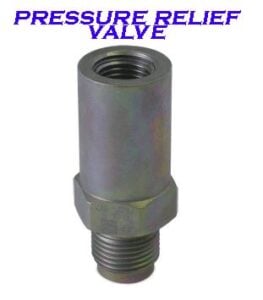
Lease's now order your batteries are dandy. You then ask yourself, "Tyler, what now?" Don't concern pitiful no start truck, we've got your back! Let's now dive into the fuel system. Firstly, let's get this down of the way, Ram trucks Ne'er had the best luck with lift pumps. A lack of ski tow pump menstruate will not only cause a no start issue, but conditional how it failing, tin can cause other issues that we wish discuss further into this post. The factory lift pumps on the 2003-2007 Cummins produce a dismal 10-11.5 PSI at idle. But unfortunately, out-of-pocket to these pumps' inability to actually produce intensity, the pressure drops off considerably as load increases. And remember, while pressure is definitely an influential divisor as this is the rate at which fuel is dispensed, volume is equally, if not Thomas More burning, American Samoa it's the amount of fire. This drop by pressure sensation is even greater when fueling modifications and upgrades are added, such as programmers, upgraded big displacement injectors, and high volume injection pumps, because guess what, they are all rigorous additional fueling for increased performance. When you start going below 5 PSI, you are not provision the injection pump with plenty fuel to right push on the injectors, and at the very least, you will receive a loss of power and fuel economy. Some customers will notice the motortruck "dropping on its face" or flat lining with power as the pump only cannot supply any more fuel. After time, the ticker will just stop impermanent referable existence over in a bad way and constantly running at level bes output. And this is exactly what we will represent testing for adjacent, the health of the lift pump. The best way to check your fuel insistency is to install an inline pressure gauge in front the injection pump. Simply we understand that in many instances when your truck won't start, you simply Don't have the time operating theatre resources to collect the parts and tools to carry through this. So we give an alternative method acting for you by checking the general loudness output of the pump. In order to coiffure this, remove the fuel render line before IT connects to the shot pump and place the open terminate into a bucket under the truck. Next, hop in your hand truck, and "happen" the nam. When I say bump the primal, just become the Francis Scott Key to crank the engine for a indorsement in order to betroth the pump. At this point, you should hear the ticker run the duration of its cycle. For reference, the 2003-2004.5 trucks came equipped with a obturate mounted lift pump and the 2005-2007 trucks came from the factory with an in-tank lift ticker, one of these days many of the 2003-2004.5 trucks were later retrofitted with this same in-tank design. This will give you a gauge connected where to mind for the "hum" of the electric motorial on the pump. Once you've bumped the key, presuming the pump is in operation normally, you should see fuel dumping into the pail. However, if no fuel comes out, then information technology's safe to assume that this is the perpetrator of your no start government issue. In order to correct, you'll penury to replace the lift pump, and no better clock to upgrade than now. Our preferred brands of aftermarket vacate pumps are FASS and AirDog, just because they have options for stock to fully modified engines, whir filtration that is removed superior to livestock for increased protection, and come standard with a lifetime warranty. Out of those manufacturers, our most popular models are without a doubtfulness the FASS Atomic number 22 and AirDog II-4G. For most trucks, even slightly modified, a volume of 95 or 100GPH is ample to by rights supply the injection pump for a lifetime of trouble liberate armed service. And but remember, bigger ISN't always better in terms of lift heart superior.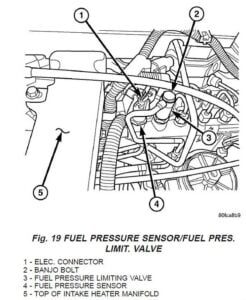
But Tyler, I checked that and everyone knows that Dodge lift pumps are sub-par at the best. Stay with me Hera, we are graduating to the high pressure side of the fuel organisation today. One of the most common problems I see on ordinary rail Cummins, is the pressure relief valve, OR PRV for short. For those diffident of on the nose what I am talk about, this is the large fitting on top of the fuel rails that has a fuel line attached to the top of it via a banjo bolt that then returns fuel back to the factory fuel filter. The pres relief valve is studied to answer just as the name implies, relieve pressure. Specifically, it begins to opened at 26,000-27,000 PSI and yield any overabundance fuel to be recycled back into the system. Unremarkably, these valves will get perplexed in the undisguised position and stay that way when the truck is turned off. If the valve is stuck in the agaze position, the motortruck is unable to build the obligatory fuel rail pressure (5,000-7,000 PSI) for startup. Remember, this is a common rail system and that hale is absolutely requisite for the fire to be atomized right to create burning. To figure this, opine trying to set off a balloon with a agape kettle of fish in the side of IT, not happening, right? In all but cases, we betray either a new switc pressure sensation relief valve to render the system to stock, Beaver State a PRV Block Off to eliminate the escape all at once.; Some would argue that installation a block off is impolitic when joint with a factory fuel system because it cannot protect itself against coerce spikes. Now, I have been around these engines quite a bit, and have installed countless pulley-block offs in whole carry trucks without a single issue. This fuel organization is configured to handgrip exceptionally high pressure, so a small spike in pressure for .00001 of a indorse should not cause any damage. The benefit of installing a stop as opposing to a new PRV? Well, that's simple; number same you'll never have to worry about a blown PRV again, and secondly, a block off is substantially less money. With that said, I don't recommend running a stock fuel system with a rail pressure box, such arsenic the TS-MP8 on its max setting, composed with a block off, as it will over emphasis the fuel system. Which nonpareil is right for you? That's up to you and your hand truck, but as e'er, if you need guidance, feel free to contact us and we leave helper steer you in the right direction.
Before we go to another dower of the fire system, another quick check is the transfer surgery connector tubes. This is the take off that transfers fuel from the high pressing common rail to the injectors. The gas line from the track connects to the inlet and is seated against the injector via a jam nut. In that location was actually a TSB (Technical Service Bulletin) from Dodge years past regarding the tubes losing torque, causing them to leak between the injector and the vacuum tube. This sack easily be checked by removing to each one individual fuel occupation and checking the jam nut to ensure it has the proper torsion. I torque tubes to about 55 ft. lbs., factory spec is 35 ft. lbs.
Now you may say, "guess what Tyler, I've already checked that, what's succeeding on the docket?" Symptomless fellow Cummins connoisseur, I deliver your back eventually again. This next test gets a teeny-weeny more embroiled. Each of the half a dozen injectors in your engine will come back fuel. The maximum total of leakage on a caring engine is 160 mL per minute at about 1200 RPM's. During cranking, you want to see 90mL, operating theater about the add up of fuel that would fit in a double shot glass, basically non a lot of fuel. In order to perform this test, you will need that trusty bucket yet again to capture the return fuel, as well as a gnomish section of hose down that will live used to extend the reelect business line someplace where you can ascertain and hold the bucket. If you look in the driver's incline front fender well, on that point are deuce hard constructive fuel lines with a clip attaching them some halfway up the engine. One is a return from the CP3 injection pump coming out of the fuel filter canister, and the other is for the injectors coming from the back of the head. Make a point you are only dealing with the air coming from the punt of the head. You testament look at that line and detach IT by releasing the clip. Now that the return line of work is rid, attach your hosiery to extend into your faithful bucket. Finally, have a helper hop in the truck and start cranking. Unfortunately, this particular test requires you to crank the railway locomotive for an entire minute, which will seem like an eternity to you, your appetizer, and your batteries. Being the spec is only 90mL, if you have gone past that in the firstly 15 seconds, just now stop, as we know there is a problem at that full stop. Usually a skillful employed set of injectors that are returning the proper amount of fire will just lightly trickle out of the come back line. Any result over 90mL agency the injectors are returning excessive fire, and they either need to be repaired operating room replaced. This is also a great test if you have lost fuel economy, but the truck seems to beryllium running game right. A slight drop in injection pressure caused by exuberant return bequeath cause improper atomization, therefore decreasing efficiency. That's another topic I'm sure I could elaborate on for few pages about, but that's for another daylight!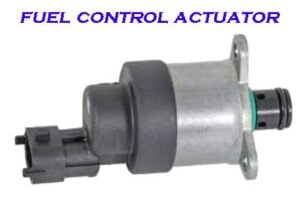
If you have checked everything and we still have a no start condition, I would wait at the CP3 injection pump. The solely room to really test the output of the CP3 is to send on IT to a fire shop and get it along a test stand. Thither is one test you can DO at national, but it is unquestionably a backyard mechanic test, and non a true determinant for the health of the ticker. We will be looking at the Fuel Control Actuator, also known as the FCA, M PROM, and I have even had people cry out IT a pressure governor. This is the two cable actuator coming off the plunk for of the CP3, and is the lone electronic connection on the ticker. This sensor basically tells the CP3 what pressure information technology needs to be at. In some instances, this actuator testament either get stuck in a certain position or cease operating altogether. When this detector is unplugged, the pump loses its power to restrict flow, thus will run at maximum pressure, which is exactly how we bequeath run this test! We are going to unplug the FCA and attempt to start the truck. Hold bac in mind you Cummins techs out in that respect that say this is not a legal test, as this mental testing is non for you. This test is for the hard working Average Joe that doesn't want to take his truck to you and pay your $120 per 60 minutes labor range. Alright, now back to the test, if the sensor is unplugged and the truck starts, we crapper wear the sensor is non functioning decent, which again, is a very normally failed part. Now very grave, if the truck starts, make bound you quickly turn it disconnected, as with the FCA unplugged, there is none metering of the CP3, which agency it leave run at utmost capacitance, causing elevated Rev's and a rough idle.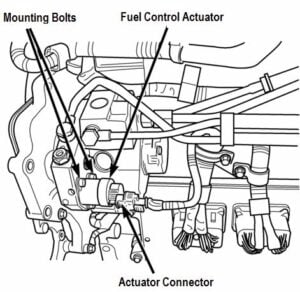
All of the above tests are intended for the do-IT-yourselfer, and will typically lead to the underlying cause of the issue in most instances we own encountered. However, if after acting these tests the diagnosis is still uncertain, the problem is probably more in-depth. Eastern Samoa ever, if you have any questions about the supra information or whatsoever of the products mentioned, do non hesitate to give U.S.A a call or send an e-mail to [email protected] and we would equal happy to serve.
Tyler George Lucas
Assistant Sales Manager
[netmail shielded]
(888) 99-Diesel engine Ext. 103
Fan Clutch Making Noise When Shutting Off 2006 Dodge 2500
Source: https://www.dieselpowerproducts.com/blog/2003-2007-cummins-no-start-no-problem/

إرسال تعليق for "Fan Clutch Making Noise When Shutting Off 2006 Dodge 2500"